
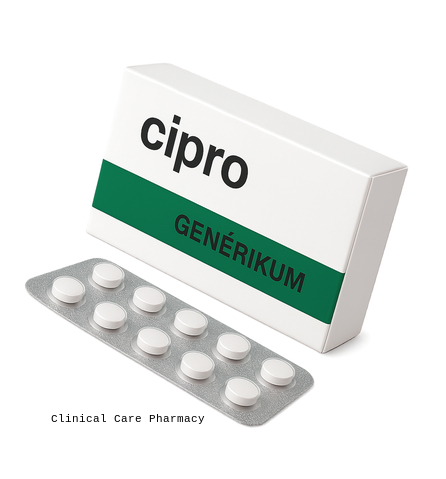
Order cipro generic cheap
- Is Cipro available without prescription in the UK?
- What does Pharmacy medicine mean in the UK?
- General information about ciprofloxacin
- How Cipro works against bacteria
- Price and availability information
- Strengths, formulations and pack types
- Common infections treated with Cipro
- UK legal classification: GSL, P and POM
- Alternatives for bacterial infections
- Cipro compared with other antibiotics
- Food, alcohol and lifestyle considerations
- Side effects and tolerability
- Resistance, stewardship and long-term issues
- Warnings, contraindications and interactions
- Additional information about Cipro
Is Cipro available without prescription in the UK?
In the United Kingdom, ciprofloxacin (commonly known by the brand name Cipro) is strictly classified as a Prescription Only Medicine (POM). Unlike some proton pump inhibitors or simple analgesics, you cannot legally purchase Cipro over the counter without a valid prescription from a qualified healthcare professional. This classification reflects the importance of ensuring appropriate clinical evaluation, microbiological guidance and antibiotic stewardship. However, in certain online services regulated by UK authorities, you may order generic Cipro online by completing an online consultation with a registered prescriber. This remote process still results in a legal prescription that authorises supply.
What does Pharmacy medicine mean in the UK?
The UK’s three principal legal classifications for human medicines are:
- POM (Prescription Only Medicine): Requires a valid prescription.
- P (Pharmacy medicine): Can be supplied without a prescription but only under the supervision of a pharmacist.
- GSL (General Sales List): Can be sold in licensed retail outlets without a prescription or pharmacist supervision.
Ciprofloxacin is classified as POM due to the need for targeted use, dosing based on infection type, and monitoring for safety and resistance. This means you cannot legally buy Cipro without fulfilling the prescription requirement, either directly in person or via an online prescriber service within the UK regulatory framework.
General information about ciprofloxacin
What is ciprofloxacin?
Ciprofloxacin is an antibiotic in the fluoroquinolone class. It is a broad-spectrum antimicrobial agent effective against a range of Gram-negative and some Gram-positive bacteria. It is widely used in clinical practice for urinary tract infections, respiratory infections, gastrointestinal infections and certain skin infections, among other indications.
What are fluoroquinolones?
Fluoroquinolones are a class of synthetic antibiotics characterised by a fluorine atom at the central ring structure. They inhibit bacterial DNA gyrase and topoisomerase IV, enzymes critical for DNA replication and repair. Other members include levofloxacin, moxifloxacin and ofloxacin.
What is the active ingredient?
The active pharmaceutical ingredient is ciprofloxacin hydrochloride. Generic products must contain the same active moiety, dissolved as the hydrochloride salt for optimal stability and absorption. Inactive ingredients may vary between branded and generic products.
Why are different formulations used?
Ciprofloxacin is available in multiple pharmaceutical forms:
- Film-coated tablets
- Modified-release tablets
- Oral suspension
- Injectable solution for intravenous use
- Ophthalmic and otic preparations
Choice of formulation depends on indication, patient factors (e.g., swallowing ability), dosing frequency and severity of infection.
Is Cipro bactericidal or bacteriostatic?
Ciprofloxacin is bactericidal. By inhibiting bacterial topoisomerases, it prevents replication, leading to cell death rather than simply halting growth.
Why is ciprofloxacin widely used?
Ciprofloxacin’s broad spectrum, good oral bioavailability (>70%), extensive tissue penetration and proven efficacy in serious infections make it a mainstay antibiotic in hospital and community settings. It also comes in a cost-effective generic form, which reduces the price for patients and health services.
How Cipro works against bacteria
What are DNA gyrase and topoisomerase IV?
These enzymes regulate the supercoiling of bacterial DNA, an essential process for replication and transcription. They introduce and remove supercoils, enabling DNA to be packaged and copied.
How does ciprofloxacin inhibit these enzymes?
Ciprofloxacin binds to the enzyme-DNA complex, stabilising it and preventing the resealing of DNA breaks introduced by these enzymes. Accumulation of DNA breaks leads to bacterial cell death.
Does Cipro kill all bacteria?
No. It is effective against many Gram-negative organisms (e.g., Escherichia coli, Klebsiella pneumoniae, Pseudomonas aeruginosa) and selected Gram-positive organisms (e.g., Staphylococcus aureus). It has limited activity against anaerobes and some resistant Gram-positive cocci.
Why is resistance an issue?
Bacterial mutations in DNA gyrase/topoisomerase or efflux pump overexpression can reduce ciprofloxacin susceptibility. Overuse or inappropriate use increases resistance risk, emphasising the need for targeted therapy based on culture results where possible.
How quickly does Cipro act?
Oral absorption is rapid, with peak plasma concentrations reached within 1–2 hours. Clinical improvement is often seen within 48–72 hours for uncomplicated infections, although full course completion is essential to prevent relapse and resistance.
Price and availability information
How much does generic Cipro cost in the UK?
Prices vary by pack size, strength and retailer. This page provides indicative information only; for exact pricing and availability, please contact Clinical Care Pharmacy in Derby or view our online offers.
| Example | Strength | Formulation | Price | Status | Note |
|---|---|---|---|---|---|
| Cipro 250 mg | 250 mg | Film-coated tablet, 10-pack | £12.99 | Information only | Ask Clinical Care Pharmacy for current stock and cheaper bulk price |
| Ciprofloxacin 500 mg | 500 mg | Film-coated tablet, 10-pack | £13.49 | Information only | Cost-effective generic price available without markup |
| Ciprofloxacin 500 mg | 500 mg | Film-coated tablet, 20-pack | £22.99 | Information only | Bulk purchase offers for longer courses |
Why do prices vary?
Factors include:
- Pack size and strength
- Manufacturer or generic brand
- Distribution and shipping costs
- Retailer margin and promotional offers
Always compare price per dose and total order cost when seeking the cheapest option online or in-store.
Strengths, formulations and pack types
What strengths are available?
Ciprofloxacin products are commonly available in:
- 250 mg film-coated tablets
- 500 mg film-coated tablets
- 750 mg film-coated tablets (prescription only)
Lower strengths may be preferred for mild infections or dosing adjustments in renal impairment.
What formulations exist?
Besides oral tablets:
- Oral suspension (for children or those unable to swallow tablets)
- IV infusion bags (reserved for hospital use)
- Ophthalmic drops (for eye infections)
- Otic drops (for ear infections)
Why does pack size matter?
UK prescription rules govern maximum supply durations to limit misuse. A 10-tablet pack may cover a typical 5-day urinary tract infection course, while longer courses may require multiple packs with separate prescriptions.
Are branded and generic ciprofloxacin identical?
Generic ciprofloxacin must demonstrate bioequivalence to the reference brand. While active ingredient and strength match, excipients, tablet coating, packaging and leaflet design can differ.
Common infections treated with Cipro
Urinary tract infections (UTIs)
Ciprofloxacin is a first-line or second-line agent for complicated UTIs, pyelonephritis and prostatitis, particularly when pathogens are resistant to first-line agents or in hospital-acquired cases.
Respiratory infections
Effective in certain community- or hospital-acquired pneumonias, exacerbations of chronic bronchitis, and infections due to Gram-negative bacteria or atypical pathogens.
Gastrointestinal infections
Used for infective diarrhoea, Campylobacter and Salmonella infections in severe cases or in travellers returning with resistant strains.
Skin and soft tissue infections
Active against many Gram-negative skin pathogens, especially in diabetic foot infections or mixed aerobic infections.
Other uses
Bone and joint infections, certain sexually transmitted infections (e.g., chancroid), and post-exposure prophylaxis for inhalational anthrax under specialist guidance.
UK legal classification: GSL, P and POM
What is POM?
Prescription Only Medicines require a valid prescription issued by a doctor, dentist, nurse prescriber or pharmacist prescriber. Cipro’s potential for serious side effects, resistance selection and need for correct dosing places it firmly in this category.
Why is Cipro not a P medicine?
Pharmacy medicines (P) are considered safer for self-care without prescription, such as emergency hormonal contraception or simple analgesics. The complexity of antibiotic use, dosing regimens and requirement for diagnostic confirmation excludes ciprofloxacin from P status.
Who regulates medicine classification in the UK?
The MHRA (Medicines and Healthcare products Regulatory Agency) oversees classification, safety monitoring and reclassification processes for all medicines in the UK.
Alternatives for bacterial infections
Other antibiotic classes
- Penicillins (e.g., amoxicillin, flucloxacillin)
- Cephalosporins (e.g., cefalexin)
- Macrolides (e.g., azithromycin, clarithromycin)
- Tetracyclines (e.g., doxycycline)
- Sulfonamides (e.g., trimethoprim-sulfamethoxazole)
Choice depends on infection site, likely pathogens, patient allergies and local resistance patterns.
Why not always start with Cipro?
Broad-spectrum antibiotics increase selection pressure for resistance. Clinical guidelines recommend narrow-spectrum agents first unless contraindicated or in severe infections where broad coverage is justified.
Cipro compared with other antibiotics
| Feature | Ciprofloxacin | Amoxicillin | Azithromycin |
| Drug class | Fluoroquinolone | Penicillin | Macrolide |
| Main mechanism | DNA gyrase inhibition | Cell wall synthesis inhibition | Protein synthesis inhibition |
| Spectrum | Broad Gram-negative, moderate Gram-positive | Broad Gram-positive, some Gram-negative | Some Gram-positive, atypical pathogens |
| OTC availability | No (POM) | No (POM) | No (POM) |
| Typical uses | UTIs, respiratory, gastroenteric infections | Respiratory, ENT, skin infections | Respiratory, sexually transmitted infections |
Is one antibiotic always better?
No. Appropriate antibiotic selection depends on organism sensitivity, infection site, patient allergies, pharmacokinetics and safety profile.
Food, alcohol and lifestyle considerations
Can food affect absorption?
Ciprofloxacin absorption may be reduced by dairy products or calcium-fortified foods due to chelation. Take tablets at least 2 hours before or 6 hours after such products for optimal bioavailability.
Can alcohol be consumed?
While moderate alcohol consumption does not directly reduce antibiotic efficacy, it can worsen side effects such as dizziness and gastrointestinal upset. Avoid excessive alcohol during treatment.
Does smoking matter?
Smoking does not directly affect ciprofloxacin metabolism but can impair immune function and wound healing, potentially affecting infection resolution.
Hydration and kidney function
- Maintain adequate fluid intake to support renal excretion.
- Adjust dose in renal impairment under medical guidance.
Side effects and tolerability
Common side effects
Side effect frequencies vary by product and patient population. Common adverse reactions include:
- Nausea, vomiting, abdominal discomfort or diarrhoea
- Headache, dizziness or lightheadedness
- Skin rash or photosensitivity reactions
Serious adverse effects
Although uncommon, serious events may occur:
- Tendinitis or tendon rupture (Achilles tendon risk)
- Peripheral neuropathy presenting as burning or tingling sensations
- CNS effects including seizures, confusion or psychosis
- Clostridioides difficile-associated diarrhoea
Why list rare effects?
Regulatory guidelines require listing known or suspected adverse effects, regardless of rarity, to inform prescribers and patients for prompt recognition and management.
Are long-term risks different?
Long-term antibiotic exposure can alter microbiome balance, increase risk of resistant organisms and impact metabolic processes. Extended courses require regular clinical review.
Resistance, stewardship and long-term issues
Why is antibiotic stewardship important?
Judicious antibiotic use minimises resistance development. Stewardship principles include accurate diagnosis, narrow-spectrum selection, correct dosing and duration.
What is bacterial resistance?
Bacteria may acquire mutations or resistance genes that reduce susceptibility to ciprofloxacin. These organisms can proliferate under antibiotic pressure, compromising future therapy.
How to limit resistance risk?
- Complete the full prescribed course even if symptoms improve.
- Avoid sharing or using leftover antibiotics.
- Use culture and sensitivity testing where possible to guide therapy.
What about recurrent infections?
Recurrent or relapsing infections may require specialist assessment, imaging or alternative therapies rather than repeated courses of the same antibiotic.
Warnings, contraindications and interactions
Who should avoid Cipro?
- Children and adolescents (risk of joint toxicity, unless benefits outweigh risks)
- Pregnant or breastfeeding women (assess risk-benefit carefully)
- Patients with history of tendon disorders related to fluoroquinolones
- Those with known hypersensitivity to ciprofloxacin or other quinolones
Can Cipro interact with other medicines?
Yes. Notable interactions include:
- Antacids, sucralfate, iron or zinc supplements: Can reduce absorption by chelation.
- Warfarin: May increase anticoagulant effect and bleeding risk.
- Theophylline: Ciprofloxacin can raise plasma theophylline levels.
- QT-prolonging medicines: Combined use may increase risk of arrhythmias.
Why is tendon toxicity a concern?
Fluoroquinolones can damage collagen in tendons, leading to tendinitis or rupture. Risk factors include age >60, corticosteroid use and strenuous exercise.
Why monitor kidney and liver function?
Ciprofloxacin is excreted renally and metabolised hepatically. Impaired organ function can lead to accumulation and increased toxicity. Dose adjustments may be necessary.
Additional information about Cipro
What does “generic Cipro” mean?
A generic antibiotic contains the same active ingredient (ciprofloxacin hydrochloride) at an equivalent strength to the reference brand. Generics undergo regulatory tests to confirm bioequivalence, ensuring similar efficacy and safety.
Why can generic leaflets differ?
Each authorised product may have unique inactive ingredients, packaging information and manufacturer details. The core clinical and safety data remain consistent across generics.
What should I check before purchase?
Always verify:
- Legal status and valid prescription requirement
- Strength and total quantity matches the prescribed regimen
- Expiry date and storage conditions
- Supplier credentials and delivery terms (fast delivery, return policy)
Where can UK medicine information be verified?
Reliable sources include the MHRA website, the electronic Medicines Compendium (eMC), official patient leaflets and advice from qualified healthcare professionals.
Does this information replace professional advice?
No. This page is provided by Clinical Care Pharmacy, Unit 4 Brian Clough Business Centre, 200-222 Cotton Lane, Derby, for general information only. To purchase Cipro or discuss your treatment, please consult your doctor or contact our pharmacy team.