
Buy furosemide fast delivery cheap
- Is furosemide available without prescription in the UK?
- What does Pharmacy medicine mean in the UK?
- General information about furosemide
- How furosemide works
- Price and availability information
- Strengths, formulations and pack types
- Uses of furosemide: oedema and hypertension
- UK legal classification: GSL, P and POM
- Alternatives for diuretic therapy
- Furosemide compared with other diuretics
- Food, alcohol and lifestyle considerations
- Side effects and tolerability
- Long-term use and excessive exposure
- Warnings, contraindications and interactions
- Additional information about furosemide
Is furosemide available without prescription in the UK?
Yes. In the UK, furosemide is classified as a Pharmacy medicine (P) for certain strengths and pack sizes intended for short-term symptom relief in patients with mild fluid retention. This means specific presentations of furosemide can be supplied without a doctor’s prescription but only under the supervision of a pharmacist. Not all strengths or uses of furosemide are available OTC; high‐dose tablets and injectable forms remain Prescription Only Medicines (POM), requiring formal prescriptions from qualified clinicians for conditions such as congestive heart failure or severe oedema associated with renal impairment.
Non‐prescription furosemide is intended for self‐care in adults with mild peripheral oedema or fluid retention due to minor conditions, provided no serious underlying disease is suspected. The pharmacist will assess each patient’s suitability, review concomitant medications and advise on correct dosing, duration and monitoring to ensure safety and effectiveness.
What does Pharmacy medicine mean in the UK?
The UK health system classifies medicines into three categories: Prescription Only Medicine (POM), Pharmacy medicine (P) and General Sales List medicine (GSL). A Pharmacy medicine can be supplied without a prescription but only through a registered pharmacy under the supervision of a pharmacist or accredited pharmacy professional. The requirement for a pharmacy supply ensures a minimum level of professional oversight, allowing the pharmacist to assess contraindications, drug interactions and suitability for use in individual patients.
Pharmacy medicines such as OTC furosemide necessitate a brief consultation between the patient and pharmacist. This is to confirm the patient’s medical history, identify any red‐flag symptoms that warrant referral to a doctor, provide tailored dosing advice and counsel on side effects, monitoring, fluid and electrolyte balance. This professional check helps mitigate risks associated with diuretic therapy, including hypotension, dehydration and electrolyte disturbances.
General information about furosemide
What is furosemide?
Furosemide is a potent diuretic belonging to the loop diuretics class. It reduces fluid buildup by inhibiting sodium and chloride reabsorption in the thick ascending limb of the loop of Henle in the kidney. By blocking the Na⁺‐K⁺‐2Cl⁻ co‐transporter, furosemide increases urinary excretion of sodium, chloride, potassium and water, which decreases intravascular volume and tissue oedema.
History and development
Discovered in the 1960s, furosemide quickly became a cornerstone in the management of oedema associated with heart failure, cirrhosis and renal disease. Its rapid onset of action, typically within one hour of oral dosing, and robust diuretic effect made it popular for acute and chronic conditions. Over decades of use, generic furosemide formulations have become widely available, offering cost‐effective alternatives to branded products.
Why is furosemide loop‐diuretic?
Loop diuretics act at the loop of Henle, a segment of the nephron with high reabsorption capacity. By targeting this region, furosemide can induce powerful diuresis even in patients with reduced kidney function, differentiating it from other diuretics like thiazides, which act more distally and may be less effective in advanced renal impairment.
Is furosemide a potassium‐sparing diuretic?
No. Furosemide increases the excretion of potassium and other electrolytes. Prolonged or high‐dose use can lead to hypokalaemia, hyponatraemia and other electrolyte imbalances, so monitoring and dietary or supplemental potassium may be necessary during therapy.
Why is non‐prescription furosemide limited?
Given its potency and risks, OTC furosemide is authorised only for short courses in mild fluid retention cases. Professional assessment helps avoid severe electrolyte disturbances, hypotension, renal impairment or masking of serious underlying conditions requiring medical treatment.
How furosemide works
What is the loop of Henle?
The loop of Henle is a U‐shaped section of the nephron responsible for concentrating urine and reabsorbing water, sodium, chloride and other ions. The thick ascending limb actively reabsorbs around 25% of filtered sodium chloride, a process targeted by loop diuretics to promote water excretion.
Mechanism of action
Furosemide inhibits the Na⁺‐K⁺‐2Cl⁻ transporter on the luminal side of tubular cells in the thick ascending limb. Blocking this transporter prevents reabsorption of sodium and chloride, creating an osmotic gradient that retains water in the tubule and increases urine output. The effect peaks within 1–2 hours for oral doses and can persist for 6–8 hours, depending on dose and individual factors.
Onset and duration
Oral furosemide is absorbed variably (60–70%) with significant interpatient differences. Food can delay absorption but does not reduce total bioavailability. Intravenous furosemide has near‐immediate onset (within 5 minutes), making it useful for acute pulmonary oedema under medical supervision.
Pharmacodynamics
Loop diuretics produce a dose‐dependent diuretic effect. Low doses may produce moderate sodium excretion, whereas higher doses can yield marked diuresis. Repeated dosing can lead to diuretic resistance in some patients, necessitating dose adjustment, combination diuretic therapy or monitoring by a healthcare professional for optimal management.
Why combination therapy?
Combining loop diuretics with thiazides may overcome resistance by targeting multiple nephron sites. However, such regimens require specialist prescription and careful monitoring, going beyond the scope of non‐prescription supply.
Price and availability information
How much does OTC furosemide cost in the UK?
Retail prices for generic furosemide vary by pack size, strength and pharmacy. At Clinical Care Pharmacy, typical prices for a 20‐tablet pack of 40 mg generic furosemide start from as low as £4.99, depending on ongoing promotions, bulk offers and fast shipping deals. We offer regular discounts on bulk purchases, subscription orders and multi‐pack savings for frequent users.
Why do prices differ?
Factors influencing price include manufacturer, distribution costs, pack size, retailer overheads and special offers. Generic competition usually drives prices lower, but branded or specialist formulations may be priced higher. Always compare cost per tablet and consider generic options to secure cheaper, clinically equivalent therapy.
| Product | Strength | Pack size | Price (GBP) | Status | Note |
|---|---|---|---|---|---|
| Generic Furosemide | 40 mg | 20 tablets | £4.99 | OTC (P) | Short‐term use only |
| Generic Furosemide | 40 mg | 60 tablets | £12.49 | OTC (P) | Order now for multi‐pack discount |
Strengths, formulations and pack types
What strengths exist?
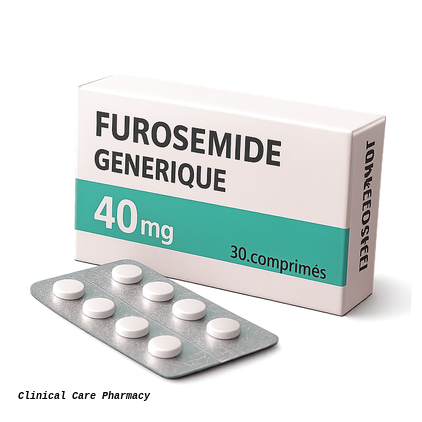
Furosemide is commonly available as 20 mg and 40 mg tablets. Prescription strengths can include 10 mg, 500 mg injection and special oral solutions. OTC supply is generally limited to 40 mg tablets in blister packs of up to 60 units, designed for short‐term self‐care. Always check the pharmacist’s guidance for the appropriate strength and duration.
Why does pack size matter?
Pack size can dictate legal classification, approved indication, and maximum authorised treatment duration. A pack of 20 tablets might be authorised for up to 7 days of short‐term use, while larger packs may require prescription due to risks associated with longer durations of diuresis and electrolyte imbalances.
Tablet vs. oral solution
Tablets provide stable dosing and ease of dispensing. Oral solutions allow flexible dosing in patients with swallowing difficulties; however, they often remain POM due to a higher risk of dosing errors and require pharmacist oversight in a clinical setting rather than OTC sale.
Generic vs. brand
Generic furosemide products must demonstrate bioequivalence to branded reference medicines. Inactive ingredients, coating and tablet appearance may differ, but therapeutic effect remains equivalent. Generics are typically much cheaper, offering substantial savings without compromising efficacy.
Uses of furosemide: oedema and hypertension
Peripheral oedema
Furosemide effectively reduces swelling in ankles, feet and hands caused by mild fluid retention from gravity or transient conditions. By promoting diuresis, it can relieve discomfort and improve mobility for short periods. OTC furosemide is intended for adults experiencing mild peripheral oedema; severe oedema or complicated conditions should be medically evaluated.
Pulmonary oedema
Acute pulmonary oedema is a medical emergency requiring high‐dose intravenous furosemide under hospital care. OTC furosemide is not suitable for this indication due to the need for immediate clinical monitoring, oxygen therapy and possible ventilatory support.
Hypertension
Low‐dose furosemide may complement antihypertensive regimens for patients with salt‐sensitive blood pressure. However, prescription supervision is recommended to adjust combination therapy, monitor renal function and electrolyte status, and prevent overtreatment leading to hypotension or dehydration.
Other off‐label uses
In specialist settings, furosemide can be used to manage acute mountain sickness, intracranial hypertension and certain drug intoxications, but these applications are prescription‐only due to complexity and risk.
UK legal classification: GSL, P and POM
What is a POM?
A Prescription Only Medicine can be supplied only with a prescription from a qualified prescriber or under specific legal mechanisms. High‐strength furosemide tablets and injections fall under this category, requiring formal clinical assessment and monitoring.
What is a Pharmacy medicine?
Pharmacy medicines (P) can be supplied without a prescription but only by a pharmacist in a registered pharmacy. This classification applies to certain furosemide presentations authorised for short‐term self‐care. Pharmacist assessment ensures safe use, identification of contraindications and referral when necessary.
What is a GSL medicine?
General Sales List medicines may be sold in various retail outlets without pharmacist supervision, subject to legal conditions. Loop diuretics are too high‐risk for GSL classification, given their potential for significant electrolyte disturbance and hypotension.
Why different classifications?
Classification depends on active ingredient, strength, pack size, maximum treatment duration, intended indication, and the level of professional oversight needed. Furosemide’s potent pharmacological effects require at least pharmacy supervision for self‐care use.
Regulator
The MHRA oversees medicine classification in the UK, including reclassification processes and post‐marketing safety monitoring to ensure that OTC furosemide remains safe and effective for appropriate patients.
Alternatives for diuretic therapy
Thiazide diuretics
Chlorothiazide and hydrochlorothiazide act at the distal convoluted tubule, producing milder diuresis. They are sometimes preferred for long‐term hypertension management but may be less effective for rapid oedema relief.
Potassium‐sparing diuretics
Spironolactone and amiloride conserve potassium by acting on the collecting duct, often used in combination with loop diuretics to balance electrolyte loss. These combinations generally require prescription supervision due to hyperkalaemia risk.
Osmotic diuretics
Mannitol is used in acute settings to reduce intracranial pressure or treat oliguria in renal failure. It is prescription‐only and administered intravenously under hospital care.
Natural remedies and lifestyle
Dietary sodium restriction, weight management and lifestyle changes can complement or reduce the need for diuretic therapy. Always discuss significant changes with a pharmacist or doctor to avoid fluid imbalance.
Furosemide compared with other diuretics
| Feature | Furosemide | Hydrochlorothiazide | Spironolactone |
| Site of action | Loop of Henle | Distal tubule | Collecting duct |
| Onset (oral) | 1 hour | 2 hours | 2–3 hours |
| Max diuresis | 5–10 hours | 6–12 hours | 48–72 hours |
| Potassium effect | Loss | Loss | Retention |
| OTC availability | Selected strengths (P) | No (POM) | No (POM) |
Why one over another?
Choice depends on clinical indication, patient’s renal function, electrolyte status, blood pressure targets and comorbidities. A pharmacist can guide on the most suitable diuretic and whether referral for prescription therapy is indicated.
Food, alcohol and lifestyle considerations
Sodium intake
High dietary sodium can blunt diuretic effect and worsen fluid retention. Reducing salt intake enhances furosemide’s efficacy, potentially allowing lower doses and minimizing side effects.
Alcohol
Excessive alcohol can cause fluid shifts, dehydration and increased blood pressure variability, affecting diuretic therapy. Moderate alcohol consumption is advised, and hydration status should be monitored.
Caffeine
Caffeine has mild diuretic properties; combined use with loop diuretics may increase urinary frequency and volume, potentially causing discomfort or urinary urgency.
Physical activity
Regular exercise supports fluid balance by promoting circulation and lymphatic drainage. However, strenuous activity can increase sweating and dehydration risk when using diuretics, so fluid intake must be balanced accordingly.
Side effects and tolerability
| Area | Examples |
| Fluid/electrolytes | Hypokalaemia, hyponatraemia, dehydration |
| Circulatory | Orthostatic hypotension, dizziness |
| Renal | Increased blood urea, potential acute kidney injury |
| Metabolic | Hyperuricaemia, possible gout exacerbation |
| Allergic | Rash, photosensitivity |
| Neuromuscular | Weakness, cramps, paresthesia |
Frequency
Common side effects include frequent urination, thirst and mild electrolyte imbalances. Less common events such as severe hypotension or allergic reactions require immediate pharmacist or medical intervention.
Management
Regular fluid and electrolyte monitoring can reduce risks. Potassium‐rich foods or supplements may be recommended. Patients should report dizziness, muscle weakness or arrhythmias promptly.
Long-term use and excessive exposure
Why short-term OTC use?
OTC furosemide is approved for up to 7 days of short‐term self‐care in mild fluid retention. Extended or repeated use increases risks of chronic electrolyte disturbances, renal impairment and hypotension.
Long-term risks
Prolonged diuretic therapy can cause persistent hypokalaemia, hyponatraemia and gout flares. Medical supervision is recommended if therapy extends beyond two weeks to adjust dosing, perform lab tests and evaluate underlying conditions.
Recurrent symptoms
Fluid retention can signal heart, liver or kidney disease requiring diagnostic evaluation. Self‐treatment should not replace professional assessment when oedema recurs frequently or is severe.
Warnings, contraindications and interactions
Who should be cautious?
- People with severe dehydration or hypotension;
- Patients with significant renal or hepatic impairment;
- Individuals taking other medications affecting fluid balance, such as lithium or NSAIDs;
- People with a history of electrolyte imbalance or gout;
- Those experiencing new or severe oedema without obvious cause.
Drug interactions
Furosemide can interact with aminoglycoside antibiotics, increasing ototoxicity risk; lithium, raising lithium levels; ACE inhibitors and ARBs, potentiating hypotension; and digoxin, increasing arrhythmia risk when hypokalaemia occurs. A pharmacist will review all medications before supply.
Pregnancy and breastfeeding
Furosemide crosses the placenta and is excreted in breast milk. Use in pregnancy and lactation should be carefully justified and supervised by a healthcare professional. OTC furosemide supply may be declined if risks outweigh benefits.
Additional information about furosemide
What does “generic furosemide” mean?
A generic medicine contains the same active ingredient and potency as the reference branded medicine, meeting stringent regulatory standards for quality, safety and efficacy. Inactive ingredients and tablet appearance may differ.
Why do leaflets vary?
Different presentations may have distinct authorised indications, excipients, pack sizes and legal categories. Always read the patient leaflet supplied with the exact product you receive to understand dosage, contraindications and side effects.
Where to verify information?
Reliable UK sources include the MHRA website, the electronic Medicines Compendium (eMC) and guidance from qualified healthcare professionals. Clinical Care Pharmacy’s team is available to answer specific queries about furosemide therapy.
Pharmacist advice
This article provides general information only and does not replace personalised advice from a pharmacist or doctor. Speak to the Clinical Care Pharmacy team at Unit 4 Brian Clough Business Centre, 200-222 Cotton Lane, Derby, for tailored recommendations, monitoring and fast, discreet delivery on your OTC furosemide order.